The Moon: How We Respond to What Happens
Someone close to you asks, “Will you be long?” Yesterday, the words would have sounded ordinary. Today, there has been a sleepless night, several difficult conversations and the feeling that people have been asking things of you all day. A sharp reply is already forming: “Will you give me a break!”
Sometimes we hear ourselves before we say it aloud. They only asked a question. We could give a short answer, ask for a little time or admit that we are tired. The other person’s words have stayed the same. Our reply has found a different form.
This also happens without any inner conversation. On a familiar staircase, your foot finds the next step by itself. Your hand recognises the weight of a familiar cup. From the way someone enters a room, you shift a little to make space for them. The life you have lived is already present in these small movements.
In the language of astrology, this side of experience belongs to the Moon. We tend to associate it with feelings, home, mother, care and safety. Behind these different words, we can see one thing: we respond to what happens with the state we are in, the experience we have gathered and the way of living we have already developed.
Yet each new day differs a little from the one before. Having a familiar response is therefore not enough. We also need to sense whether it fits this moment.
The light by which people kept time
The Moon changes shape before our eyes. A thin crescent grows wider, the nights become brighter, and then the light begins to wane. After a while, the familiar sequence returns. Long before we spoke of emotional needs, this rhythm helped people count time.
In Mesopotamia, the lunar god was called Nanna or Sin. This was a male god. Already, the familiar modern link between the Moon and femininity ceases to look like the only possible reading. Different cultures saw different faces in the light of the night sky.
In Greek mythology, Selene crossed the night sky. Artemis and Hecate gradually joined the circle of lunar images. In the Roman world, Luna and Diana appeared alongside each other. Night could mean rest, mystery, independence, fear or waiting for someone to return. It held more than one feeling and more than one human role.
For ancient astrologers, the Moon belonged to the language of nature. Ptolemy attributed a chiefly moistening effect to it, which he linked to its closeness to the Earth. This is not yet the psychological Moon we know. These were qualities used to explain growth, change and earthly life.
In the seventeenth century, William Lilly associated the Moon with wet nurses, travellers, messengers and people whose work involved water and everyday needs. He described its character in terms of changeability, receptiveness and a tendency towards movement. The Moon does not fit into a single, motionless picture of domestic comfort.
Later, inner experience increasingly comes to the fore: how we feel among other people, where we seek protection, what we grow used to and what we take to heart. The ancient rhythm of the sky takes on a very personal sound. We each have our own rises and falls, familiar ways of settling ourselves and our own sensitivity to change.
But a resemblance between images does not mean that a person must change according to a simple timetable of lunar phases. Another thought matters more to our story: the return of something familiar does not cancel out a new state. Morning has come again; the cup is the same, the kitchen is the same. The person entering it today has already lived through yesterday.
The Priestess knows more than she says
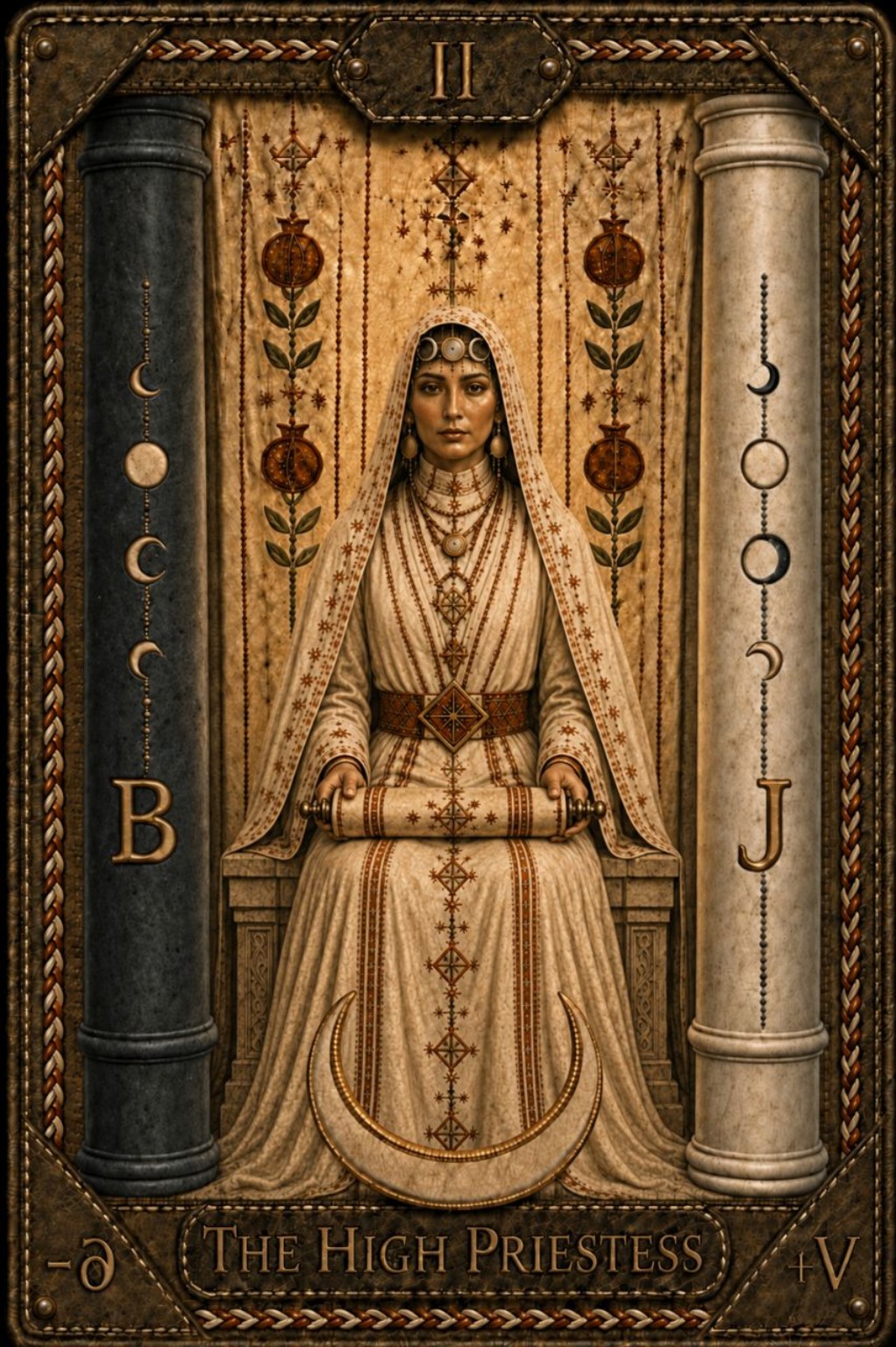
In our Tarot system, the astrological Moon corresponds to the High Priestess. The distinction matters: there is also a card called the Moon, but here it belongs to Pisces. The Priestess and the Moon are two different cards, although their imagery can sometimes come very close.
The Priestess sits quietly, holding a scroll that is partly hidden. Behind her is a veil. The image readily suggests a kind of knowledge that need not be unfolded into a detailed explanation every time.
A musician hears that the ensemble is rushing today and adjusts an entry slightly. He does not mentally review every previous rehearsal. From a child’s movement, a mother can tell that the child is already tired, though still asking to play. An experienced craftsperson picks up a tool and immediately feels that their hand is more tense than usual today.
What we have lived through is present in the response itself. Sometimes we can explain it later; sometimes we simply say, “I just felt it.” That does not make the feeling infallible. We can mistake someone’s thoughtfulness for hurt because that is how arguments used to begin. We can expect a trap where there is none.
The Priestess helps us see the depth of this knowledge, while life keeps refining it. A familiar adult responds differently, a new team does not laugh at questions, the usual road turns out to be slippery. Past experience meets something that has not happened before.
The Moon therefore does more than store habits. It takes part in how we use them now: where we trust what is familiar, where we slow down, where we put in more effort and where we allow a new response to emerge.
Andreev’s window on the world
In Astrology 2.0 and Bioastrology 2.0, Pavel Andreev links the Moon to familiar behaviour, impressions, everyday rhythms and the ability to make ourselves at home in the world. One of his images is a window through which we look at what is happening. What we notice is already connected to how we have grown used to living.
Another image is the autopilot. It is instantly recognisable: the way home, a favourite place at the table, a familiar sequence of morning tasks. If we had to invent all of this every day, an ordinary morning would take far too much energy.
But Andreev also describes a movement towards the new. The Moon notices signals from the surroundings, relates them to the person and takes part in changes of behaviour. Autopilot and receptiveness sit side by side. That is much more interesting than a simple portrait of someone who likes comfort and wants nothing to change.
In our model, we can call this work the adjustment of a response: we answer what is happening in light of the state we are already in and the ways we have learned to react. Behind the long definition lies a very ordinary experience. Yesterday, a joke helped ease a conversation. Today, the other person is too upset, and the same joke would only push them away. We hear the difference and stay beside them without it.
The adjustment need not be conscious. A baker slightly alters a movement of the hands, someone leaves a longer pause in conversation, an ensemble gradually finds a shared tempo. Nobody has to begin by listing exactly what has changed.
Nor does it always require a different response. If a familiar movement fits, there is no reason to abandon it deliberately. Noticing the present allows us both to change a habit and to carry on using it with ease.
Adapting sometimes means objecting
The word “adaptation” often sounds like an invitation to put up with things. Get used to the noise, ignore it, do not take it to heart. As though adapting well always meant ceasing to inconvenience other people with our discomfort.
But sensing what is happening more accurately sometimes means no longer putting up with it. Asking someone to speak more quietly. Admitting that we cannot manage our usual workload today. Moving away when someone comes too close. Noticing our irritation in time and ending a conversation before it becomes a quarrel.
Andreev, too, distinguishes adaptation from excessive submission to other people’s wishes. This helps us avoid turning the Moon into a duty to be accommodating. A living response may be gentle, sharp, cautious or quick, depending on what the person has encountered.
In What Values Are and How They Work, the pleasure of food is explored through different situations. For one person, what matters is the trustworthy people they buy bread from. For another, it is finally getting a dish right. For a third, it is loved ones gathered around the table. The same word conceals different reasons for choosing.
The Moon lets us ask another question alongside this: how am I taking part in this dinner today? Perhaps I am glad to see everyone but too tired for a long conversation. Perhaps, after several evenings alone, I would like to linger. The importance of closeness has not disappeared. What has changed is how I can be part of it now.
This is how Venus and the Moon differ. What matters influences our choices; our state and experience shape our response in the moment. Sometimes they work together. Sometimes we discover that what we cherish is difficult for us today.
Marina learns to live a different kind of day
In Where Astrology Comes From, there is a story about a pianist named Marina. After an injury, her old concert life becomes less and less available to her. She can still gather herself and perform, but recovery takes longer.
Let us imagine how this story might continue. Marina starts teaching. The first lesson is over and the pupil has left. Out of habit, she is ready to sit down at the instrument again and spend a long time working through everything that went wrong that day. This is how she has worked for years.
But this day is already different. Some of her energy has gone into listening, talking and attending to someone else’s difficulties. Her old way of finishing work adds to her exhaustion. Gradually, Marina learns to make short notes, take a break and return later to what she has heard. One day she needs quiet; another, a walk and a conversation about something entirely unrelated.
No new routine guarantees that it will always feel right. Little by little, Marina gets to know herself in a changed life. She listens for what she can pay attention to, when she begins to hurry her pupil and why a familiar passage in the music sometimes irritates her.
Neptune, in this story, concerns whether she can recognise teaching as a continuation of her musical life. We hear the Moon in how her day unfolds today. Her old inspiration may not yet have returned, while living is already becoming a little easier.
Mars is close by too: the lesson took place, the exercise was completed, the call was made. But the Moon does not have to wait for an act to end. Marina finds her bearings before the meeting, listens as the lesson unfolds and notices her tiredness afterwards. In life, these movements are interwoven.
Twelve signs, twelve sides of a living response
We respond one way at the beginning of something and another in familiar work. A conversation with a stranger calls for one kind of attention; continuing a long journey calls for another. The Moon remains connected to our state and experience, while the signs help us distinguish the situations in which that experience meets the present.
What follows, then, is not twelve compulsory personality types. We will look at different ways a person can enter something new, sustain what is familiar, respond to loved ones, return to their work and settle into life after change.
Moon in Aries
Asya opens the first meeting of a writing workshop. On a previous course, people listened to her but wrote almost nothing. She remembers her disappointment and is already afraid of silence.
Two people are late. The others sit stiffly. Asya wants to speak faster, fill the pause and demand some sort of activity. But she notices that this would begin another long explanation behind which the participants could hide from making their first attempt.
She suggests three minutes of silent writing and takes a sheet of paper herself. The tension does not vanish at once, but it finds a manageable task. A few minutes later, one participant looks up: may I read mine?
In Aries, the response to a beginning is especially clear. How do we meet the moment when it is time to join in? Rush forward, freeze, demand immediate courage of ourselves? Behind the first movement lies a history of earlier beginnings.
This is where the familiar quickness of the Moon in Aries comes from. Yet the ability to respond quickly does not require us to speed everything up each time. Sometimes we need a little more time for our own readiness to become something we can begin with again.
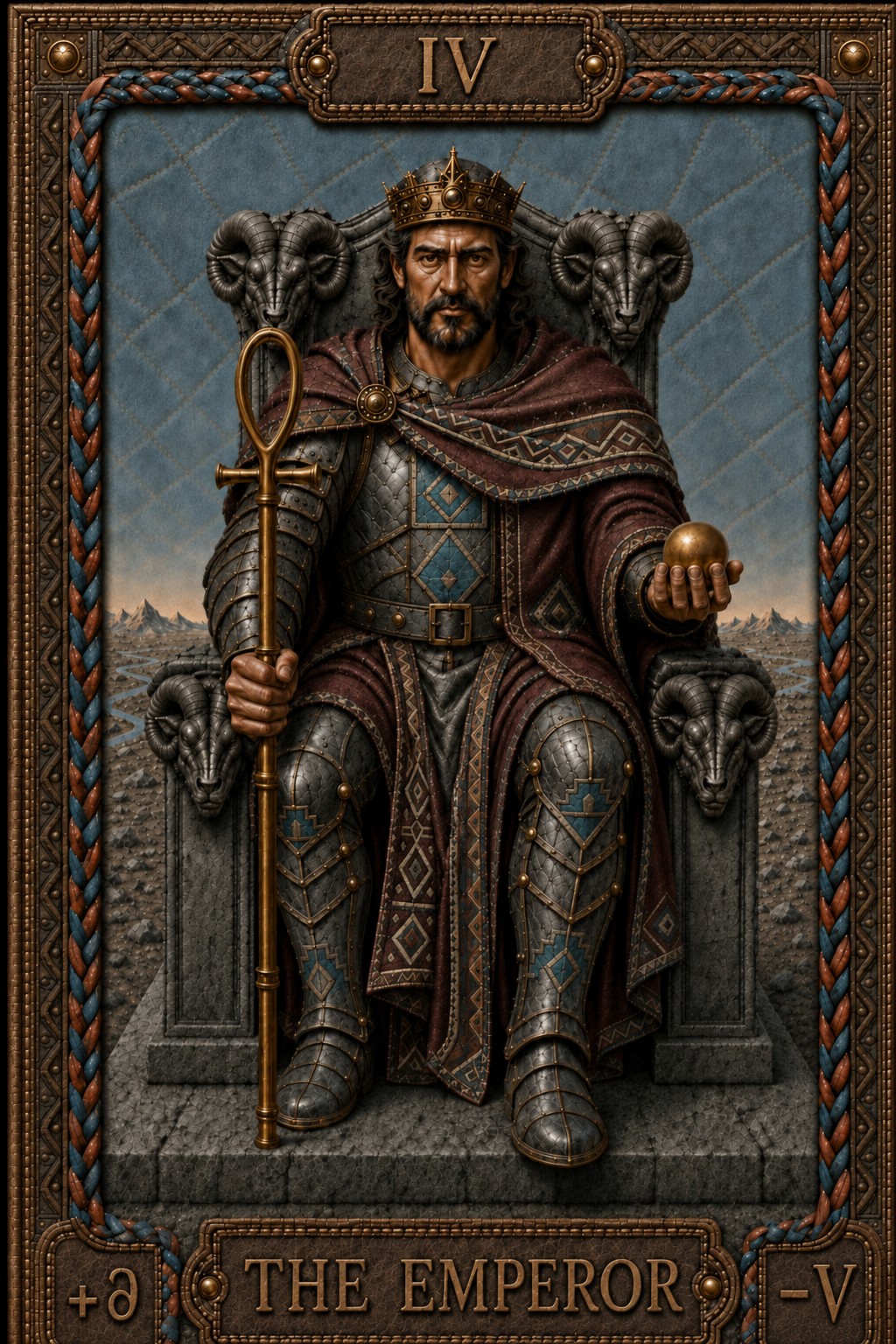
The Emperor marks the definiteness of the first step. Asya is already running the meeting while learning how to be in it. She does not need to forget the earlier failure; she only needs to keep it from writing the entire script of the new evening.
Moon in Taurus
A baker begins working a familiar dough. The recipe has not changed, and the flour came from the same supplier. But the room is warmer today, the work is going differently, and his hands have been tiring more quickly since the morning.
He feels it in the movement. He changes his pace a little, stops earlier to check the dough and does not hurry the next stage. From outside, nothing special seems to be happening: a person is doing familiar work. It is precisely his experience that helps him avoid repeating it blindly.
In Taurus, the Moon is particularly visible in how we handle what we have learned to rely on. A familiar object, food, the body, a craft — each has its own way of going. We recognise it and notice when a small adjustment is needed today.
The link between Taurus, bodily experience and calm therefore makes sense. A comfortable chair, warm food or familiar hands can help us feel at home. But the familiar does not have to suit every moment. After a long journey, we may want a different supper; a tired body settles differently into the same armchair.
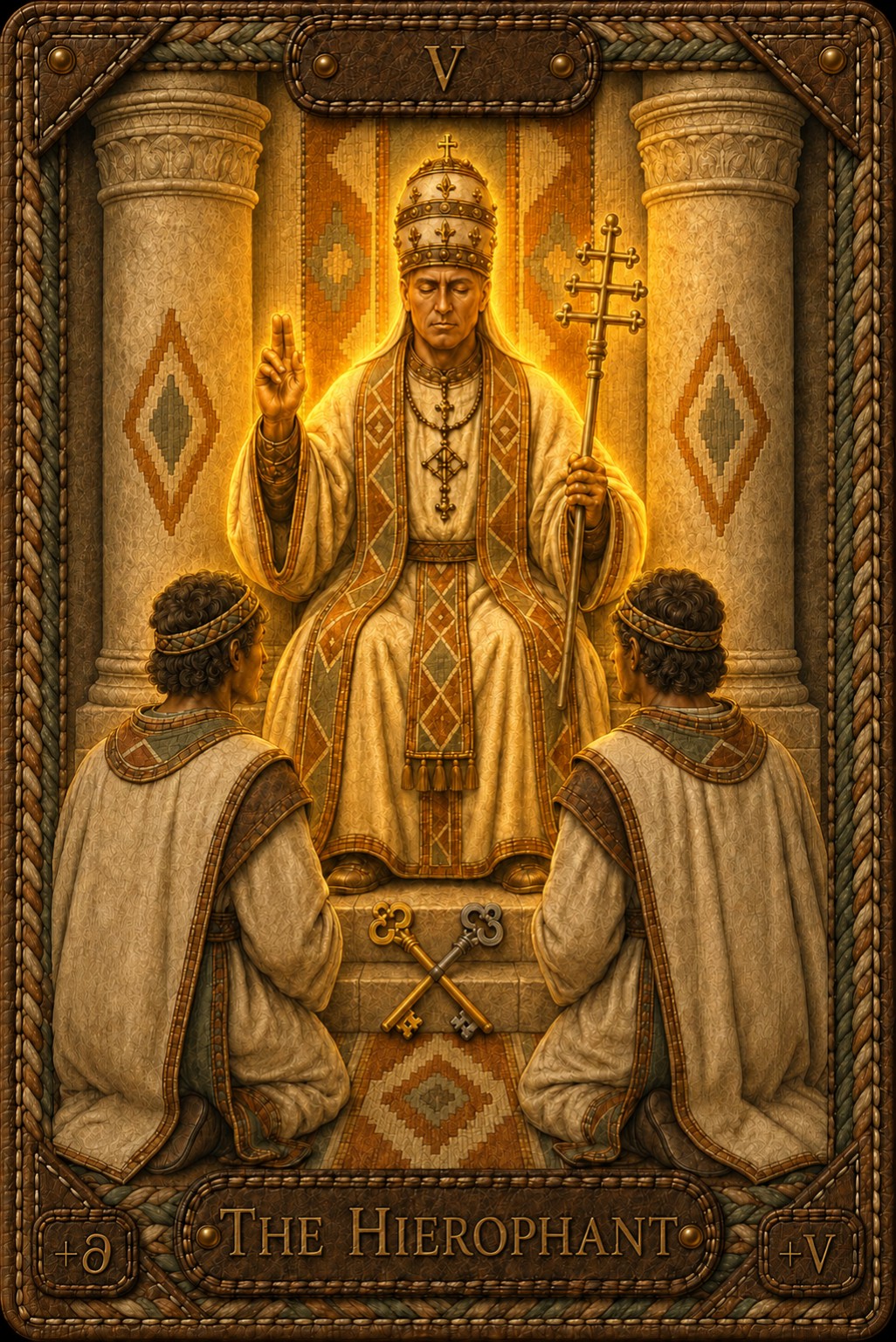
The Hierophant reminds us of what has been learned and passed on. Living skill contains more than the exact repetition of instructions. A baker can show an apprentice a recipe, then say: now look at what is happening under your hands.
In the opposite sign, Scorpio, a familiar support changes or disappears. Here it is still with us. The Moon’s work lets us use it attentively, without mistaking reliability for stillness.
The baker can feel that his hands are tiring sooner today and find a suitable pace, while still valuing dependable work just as much. Venus helps us see the worth of what we can count on. The Moon concerns how he works with it today. To pass his observation on to an apprentice, he will still need to find clear words or show the difference. A fine sense of what is happening and the ability to explain it to someone else do not always arrive together.
Moon in Gemini
A translator has finally reached the author of a play by phone. He has prepared his questions and is afraid of running out of time. He begins speaking quickly, leaving almost no pauses. The author’s answers grow shorter.
In previous work conversations, this kind of brevity usually meant irritation. The translator is about to apologise and end the call. But he notices that the author has tried several times to clarify one detail. He stops and lets him finish.
It turns out that the author simply needed time to remember the scene. After that, the conversation changes. The translator stops rushing, and the answers become longer.
We hear the Moon in Gemini in pauses, pace and the way someone picks up a remark. We respond to this person in light of how the conversation is already going, while bringing habits from countless other conversations into it.
Hence the familiar flexibility, curiosity and ease of switching attention. Sometimes they help us speak; sometimes, to fall silent at the right moment. The number of words tells us little about how well the participants sense each other.
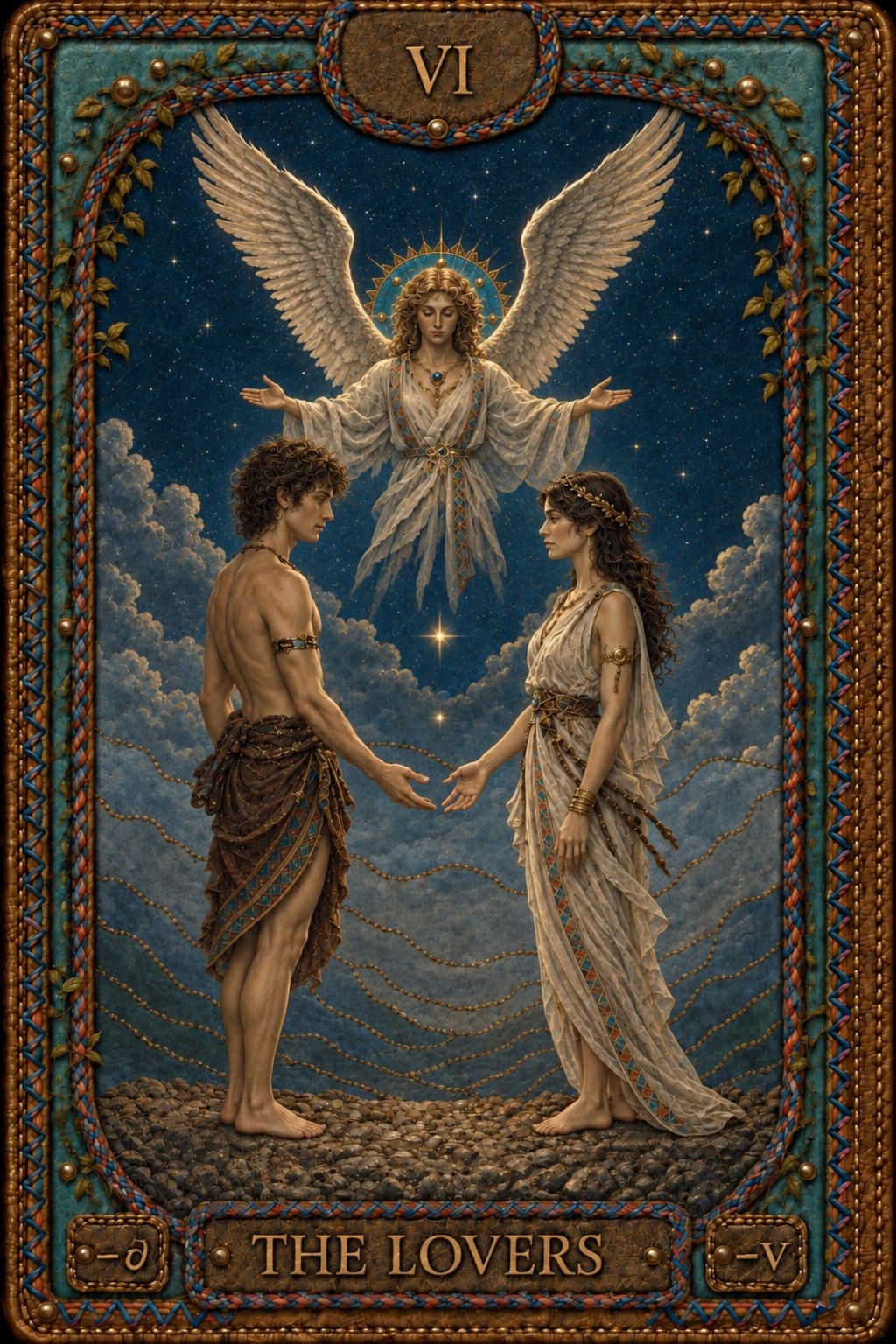
The Lovers, the card of Gemini, holds together an encounter between different people. The author did not have to become faster for the translator to stop hearing refusal in his pauses. A small change of response allowed the conversation to continue.
Moon in Cancer
A family has agreed to help their grandmother. After a week, it becomes clear that the son arrives after a night shift and can barely stay on his feet. The daughter tries to manage everything. The grandmother feels embarrassed to ask for another glass of water: they are already doing so much for her.
At some point, the daughter hears familiar awkwardness in the usual “I don’t need anything”. She sits down beside her and asks a simpler question: shall I bring some water or open the window first? It is easier for the grandmother to choose than to explain, once again, why she has the right to trouble her family.
They no longer leave long morning conversations to the son. He brings the shopping in the evening. The daughter learns to say in advance when she needs help herself. Their involvement becomes less heroic and better suited to these particular people.
Here the Moon responds to a shared life. Each person has their own energy, habits and ways of asking and caring. Closeness allows us to learn them, but sometimes it gets in the way: we are too sure we have long known what everyone needs.
Cancer, then, is not exhausted by the image of a warm home. What matters is whether the household can notice the people who live in it today. A child has grown, someone is tired, familiar help has become confining — and closeness seeks another gesture.
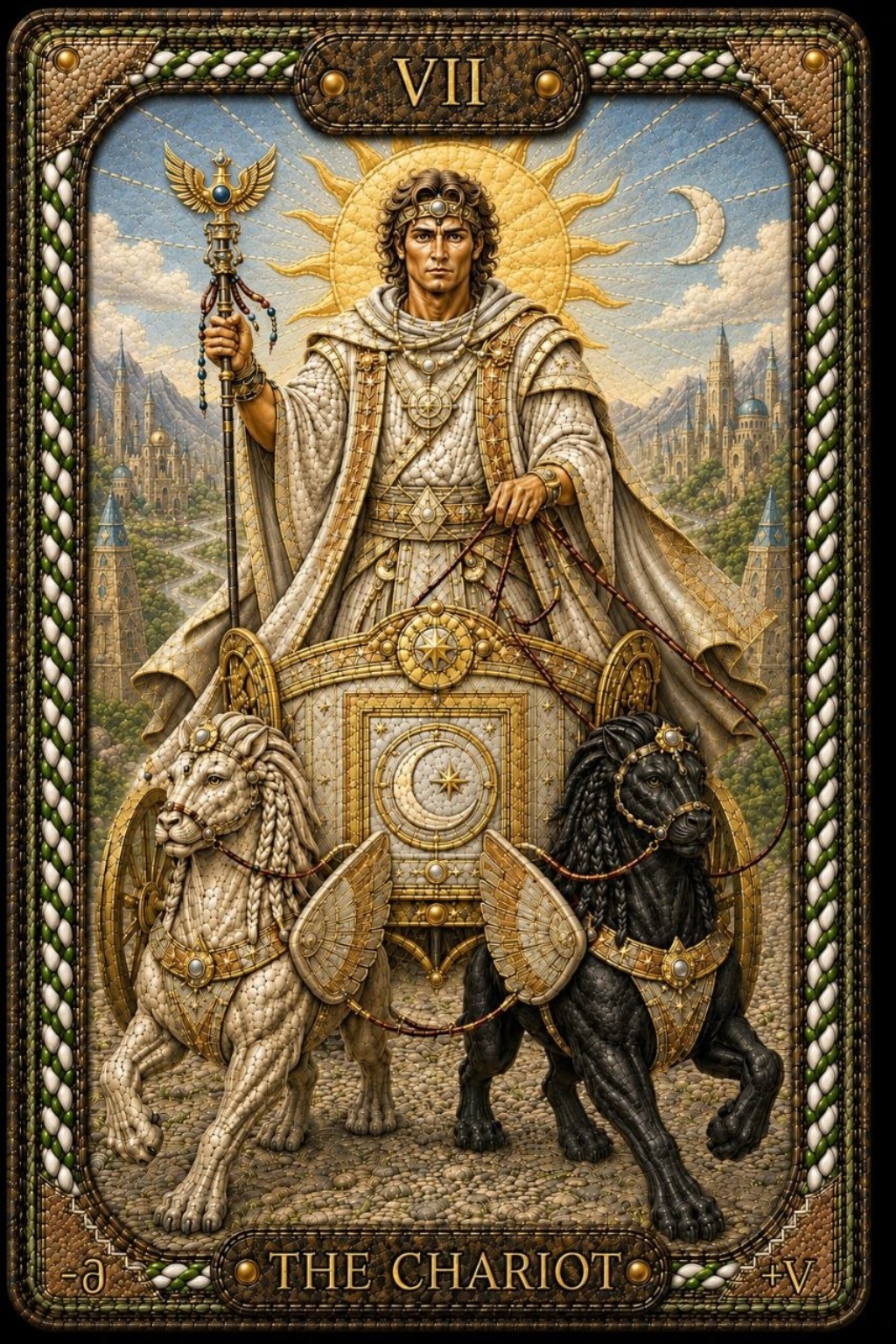
The Chariot brings different movements together. The family does not need to share one mood. A life together can hold when one person is lively, another is quiet, and a third is still learning to speak plainly about their needs.
Moon in Leo
Egor has finished the first showing of his paper lamps. For several weeks, he worked late into the night. Now he sits at the table, looks at the pieces that turned out well and cannot begin the next one.
Excitement used to help: think of an idea, try it, stay up until it works. Today, that approach only deepens the emptiness. Egor picks up an unfinished experiment and spends a while simply watching how its shadow changes as he turns it towards the window.
Gradually, his attention returns. He notices an interesting fold and tries it. He makes little that evening, but the work becomes part of his own life again, rather than a demand to prove his earlier success.
The Moon in Leo concerns participation in what we create in our own name. How do we enter our music, drawing or story today? What helps us gather ourselves, and what merely makes us imitate our former enthusiasm?
The familiar association of Leo with recognition and warmth is easy to understand here. Support can restore courage. But applause does not have to remove tiredness, and an absent audience does not mean that living creativity is absent too.
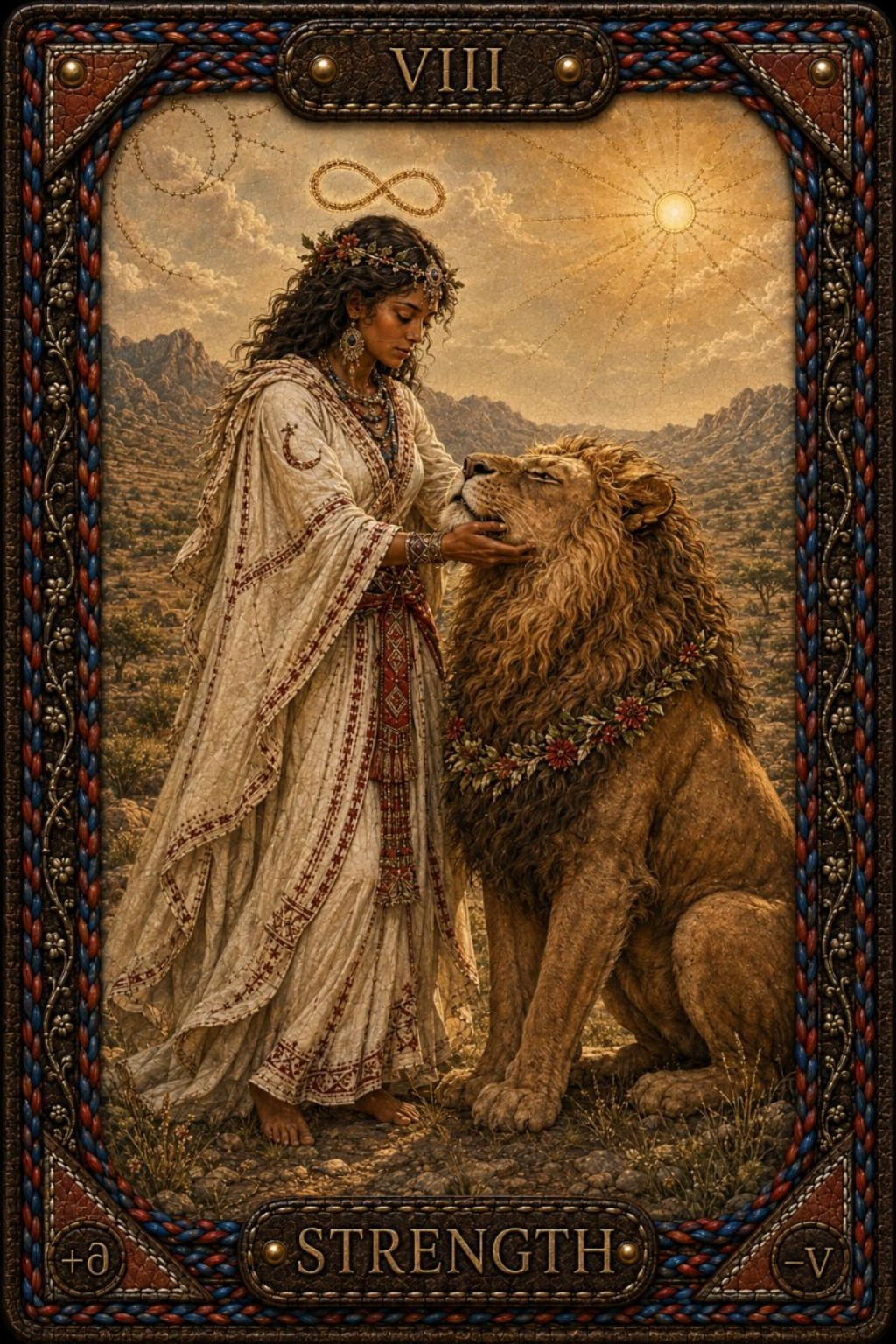
Strength, the card of Leo, reminds us of a movement that gathers from within. Sometimes it needs more room; sometimes, quiet and one small experiment. Egor continues his work when he stops demanding the same brightness of every evening.
Moon in Virgo
A guide is used to talking while the group moves from painting to painting. Today, one visitor is exploring a raised diagram with his hands. When the commentary continues at the same time, he loses the thread and asks to go back.
At first, the guide repeats the explanation more loudly. Then he notices: the visitor hears well; what is difficult is doing two things at once. At the next section, the guide waits for the hands to stop before he begins speaking.
The visit slows down. After a while, the pauses become natural. The visitor asks questions with greater confidence, and the guide stops filling every second with his voice.
This is how the Moon in Virgo works: a familiar way of taking part adjusts to the particulars of this case. The general knowledge that people are different finds a place in an actual response.
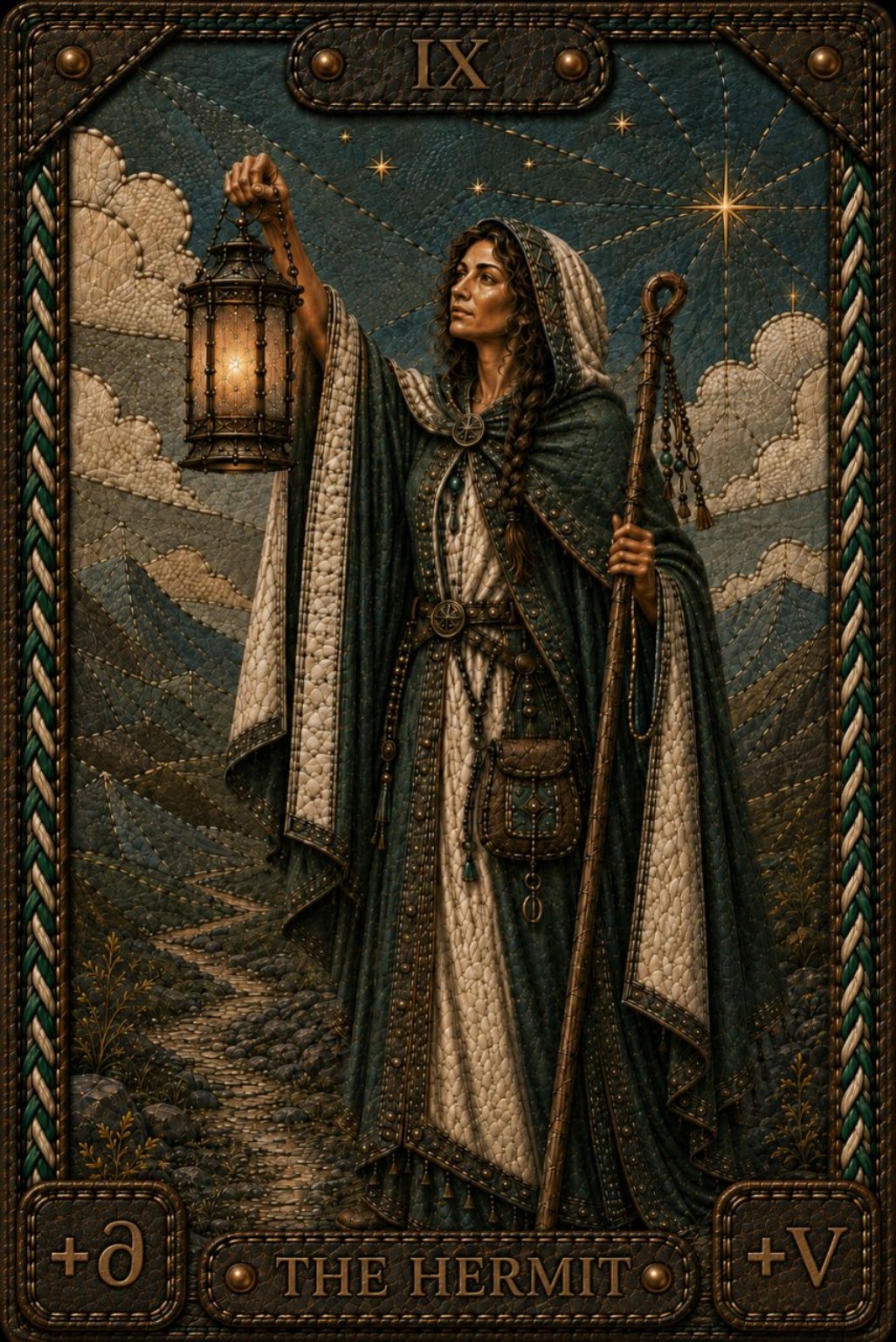
The Hermit lights up a small area. Attention is useful here not because of the number of details noticed, but because the necessary one has been found among them. Sometimes we need to change the pace, sometimes the effort, and sometimes simply stop doing what used to help.
In Taurus, we felt how familiar work was going today. Virgo brings our gaze closer to the person or task for whom the usual approach did not fit. Such an exception does not devalue experience. Experience becomes richer when it can make room for it.
The pause was a definite act. Mars lets us notice that the guide really did stop speaking and allow time to work with the diagram. The Moon is visible in how he heard the visitor’s difficulty and changed his own habit of talking without a break. He could have left the same pause because the schedule told him to, without noticing what was happening for the person in front of him. From the outside, the action would look similar.
This does not mean that the Moon must work without thought. The guide could consciously ask when it would be easier to listen, then carefully choose another pace. The distinction lies in what we want to understand: which step was carried out, or how someone is responding to this encounter with all the experience they have brought to it.
Moon in Libra
Two practitioners have divided the days in their shared room. The timetable works, but after the old arguments every request for clarification still sounds suspicious. “Are you here until six tomorrow?” one asks. The other already hears, “Planning to stay late again?”
He almost begins to defend himself, but instead asks why the other wants to know. It turns out that a key needs to be handed to a visitor. The conversation ends calmly, for the first time in weeks.
One such occasion is not enough to dissolve their old wariness. But others follow. They begin giving earlier notice, asking clearer questions and no longer answering every hesitation with the whole weight of old resentment.
In Libra, the Moon is sensitive to what has already developed between the parties. Each has their own expectations and the right to remain a separate person. Being able to respond to each other does not require them to become close or agree about everything.
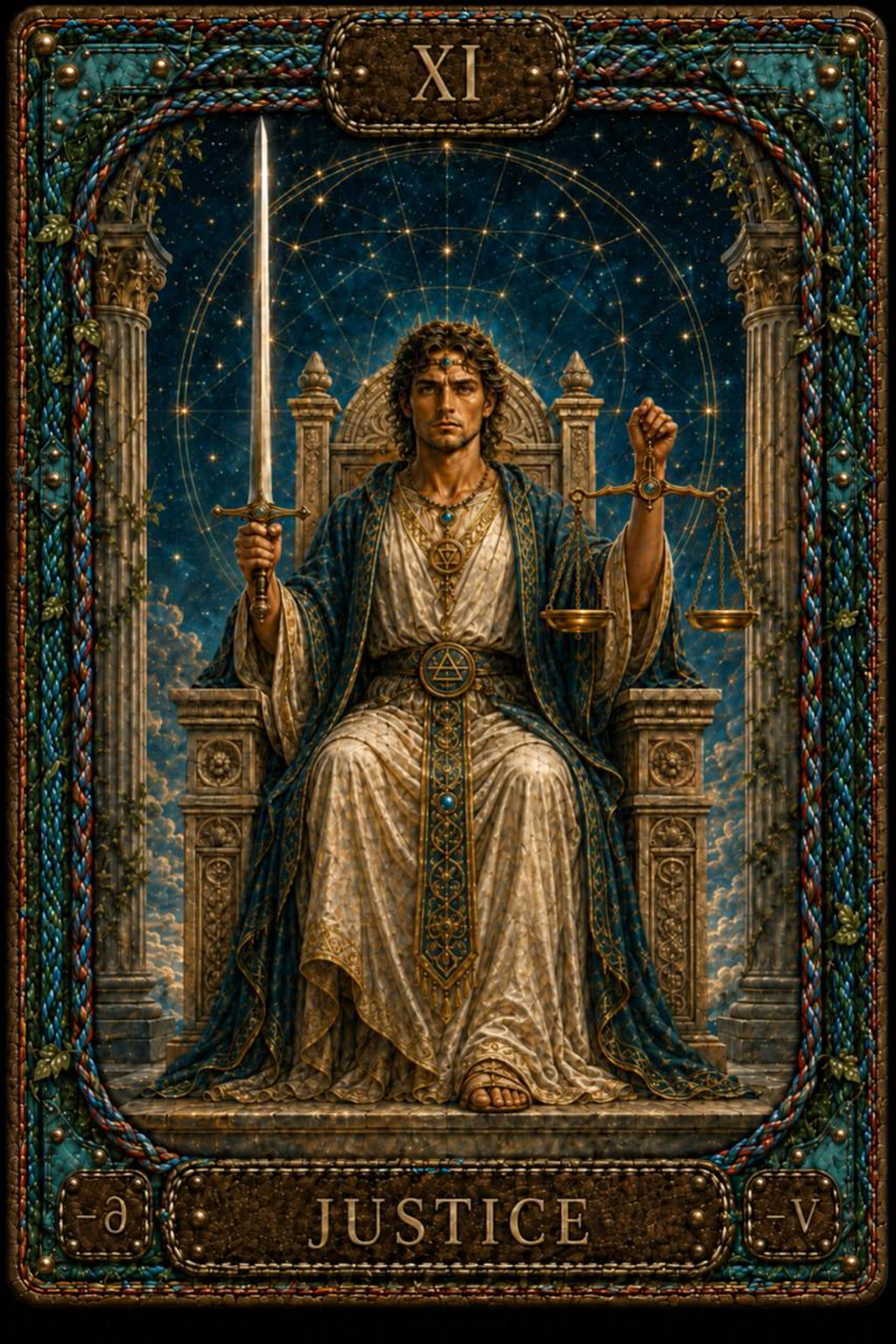
Justice helps preserve this separateness. The familiar lunar need for harmony becomes easier to understand: life is easier when every remark does not require us to prepare for a clash. Yet outward politeness can hide something a person has long been afraid to say.
Sometimes the new response will be gentler. At other times, it will be direct for the first time: “That time doesn’t work for me.” A relationship may become calmer precisely because one person has stopped agreeing in advance and silently resenting it.
Moon in Scorpio
The editorial team no longer produces a print edition. The old obligation is closed, and the work is done on the website. Yet every Wednesday, the editor wakes with the feeling that he is already late. His hand opens the folder where the pages used to go.
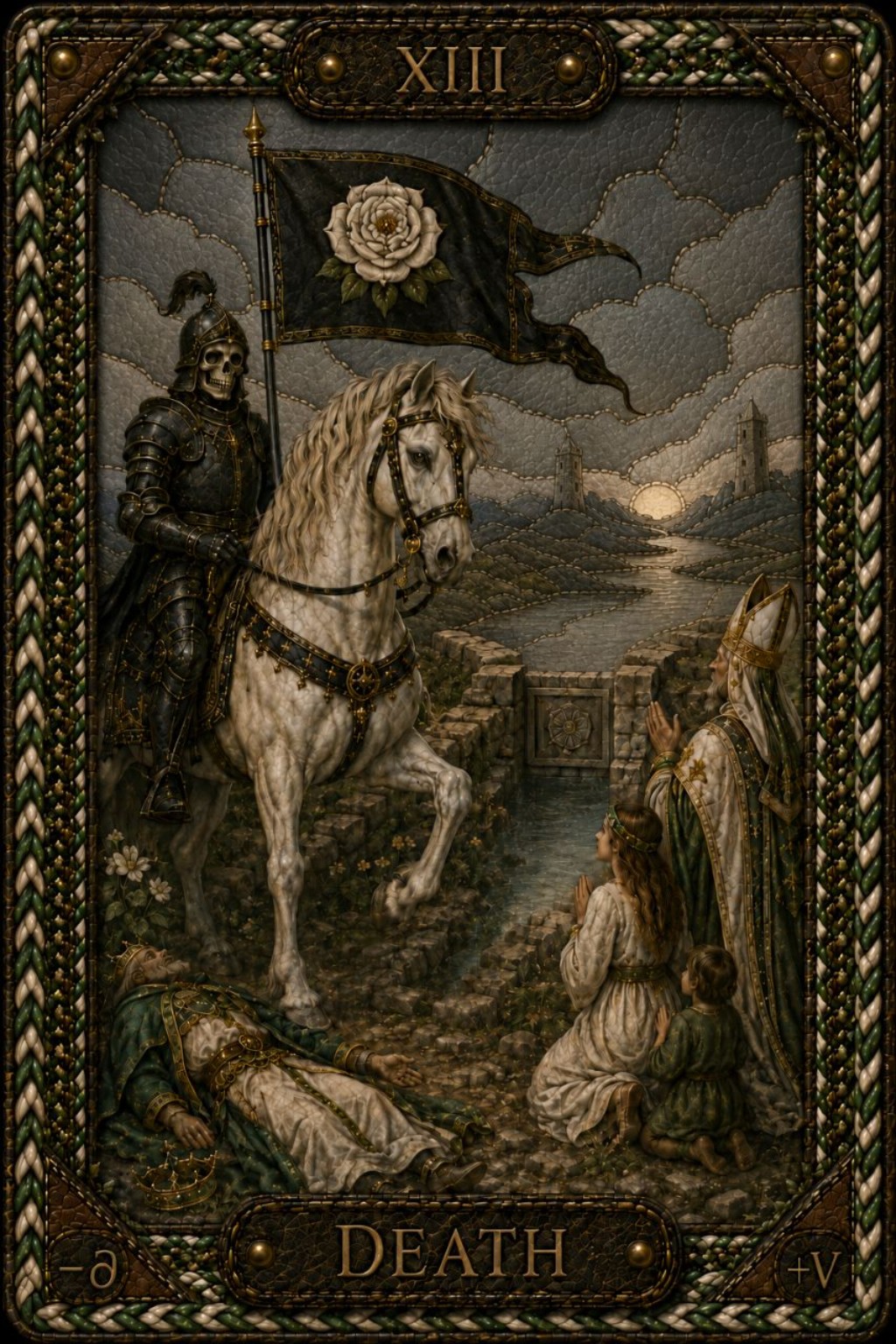
At first he is annoyed with himself. It is all perfectly clear, so why check again? Then he begins to notice how much his life rested on that rhythm: material came together by Wednesday, everyone spoke to each other on Wednesday, and in the evening he could finally breathe out.
He keeps a short team meeting in the middle of the week and gradually fills the rest of the time with new work. During the first weeks, the anxiety still returns. Later, the familiar day stops bringing the feeling of a missed deadline every time.
In Scorpio, present life meets a response that grew around a former support. An obligation has ended, someone has left, a familiar place has closed — yet the inner movement continues as if there were still a need to wait, guard or catch up.
Hence the recognisable intensity of feeling and long memory. But a strong feeling explains little by itself. What matters is what the person is still responding to, and how they gradually come to know their changed life.
Death, the card of Scorpio, shows an ending. It does not require feeling to stop immediately. The Moon’s change can be quiet: one Wednesday, the editor remembers the old edition only after lunch. The past is still his past, but it no longer governs every movement of the day.
Moon in Sagittarius
The walkers have reached the hut. Yesterday’s stage was long but successful. In the morning, the strongest member immediately sets the old pace. The others try to keep up, and gradually conversation dies away.
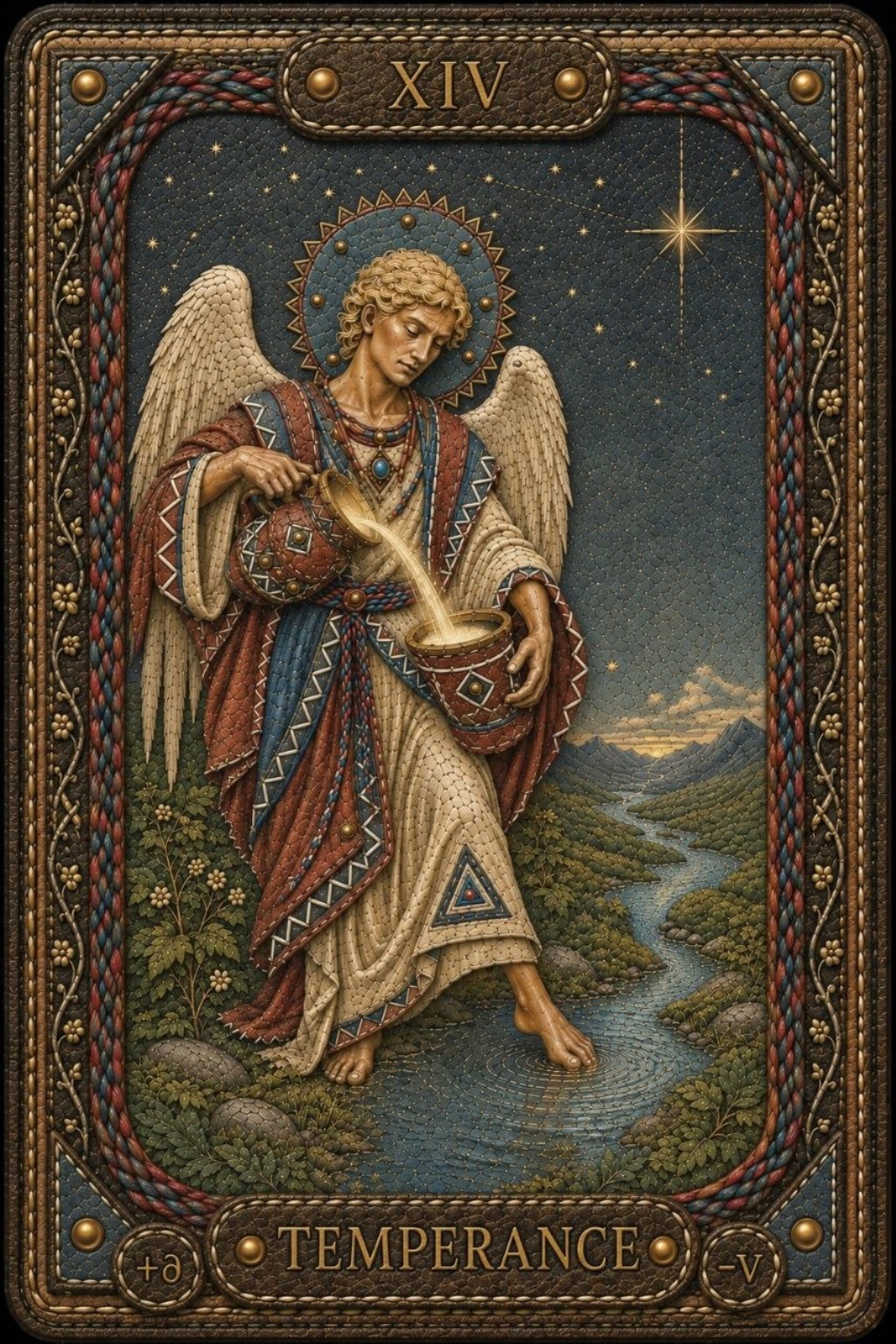
The leader notices before anyone complains. After yesterday’s climb, the group has different reserves of energy. They take the first break sooner and change the walking order. People begin talking and looking around again.
The Moon in Sagittarius helps us sense how to continue the journey in the state we are already in. The distant goal remains, while today’s step need not copy yesterday’s.
The same applies to learning a language. After several good evenings, someone wants to study for two hours every day. Then a demanding week at work arrives. They can scold themselves for fading enthusiasm, or find a shorter session they can engage with attentively now.
The familiar optimism and love of open spaces help us move while they remain attentive to the traveller. Sometimes faith in continuing is expressed in a pause; sometimes, in finally lengthening our stride after a rest.
Temperance, the card of Sagittarius, helps us feel the measure of movement. Gemini listens to the course of a conversation between people; Sagittarius, to how a person or group travels their road. In both cases, the next response grows out of a life already under way.
Moon in Capricorn
A library operates across several buildings. Books arrive on time, requests go through and responsibilities are clear. But after the weekend, a queue builds at the returns desk. A member of staff, used to managing alone, takes books from people’s hands faster and faster and begins to get muddled.

Her colleague recognises the moment: a little longer and she will stop hearing the questions. He comes over to help. On another day, she manages to say first, “Could you stay here for ten minutes?” This is a new habit for her, and at first asking is harder than the queue itself.
The Moon in Capricorn is visible in how living people respond to the course of a shared undertaking. They bring accumulated tiredness, experience of rushes and the habit of either enduring or calling for help straight away. These things affect how they work even within a well-designed arrangement.
The chart on the wall feels nothing. But the people who work by it gradually learn to notice themselves and each other within it. The organisation becomes more sustainable when someone asks for help before reaching breaking point.
The familiar reserve of the Moon in Capricorn need not, therefore, mean coldness. Sometimes it reflects an ability not to pass one’s tension on to every visitor. Sometimes it conceals an inability to admit that things have become too hard. From outside, the two states may look alike.
Cancer supports people’s shared life. Capricorn helps them live within an interconnected undertaking, where a delay in one part affects the others. A good arrangement leaves room for the person who is more tired than usual today.
Moon in Aquarius
A workshop has agreed to help beginners work through mistakes without mockery. The manager has upheld the rule several times already. But the experienced craftspeople still have a habit of making a joke before hearing the explanation.
One day, a trainee brings in a damaged part. One of the craftspeople almost makes the familiar cutting remark, then stops and asks at which step things began to go differently. Another draws up a chair. They begin looking into it without the usual test of the beginner’s ability to take a joke.
Over time, newcomers find it easier to approach. The experienced staff need fewer special reminders. A shared principle acquires a living way of responding to people.
One successful discussion does not yet tell us that everyone’s habits have changed. An experienced worker may hold back a jibe while the manager is there and return to the old tone in their absence. The reverse is possible too: the worker may learn to respond calmly to a newcomer without sharing all the workshop’s beliefs. Valuing a shared principle, applying it in a particular case, and developing a habitual way of responding to people are connected, but each needs to be noticed in its own right.
In Aquarius, the Moon takes part in the habits that develop within a shared practice. Here we can see especially clearly that our response does not belong to us alone. We pick up a group’s tone, its ways of meeting the unfamiliar, handling mistakes and making room for another person.
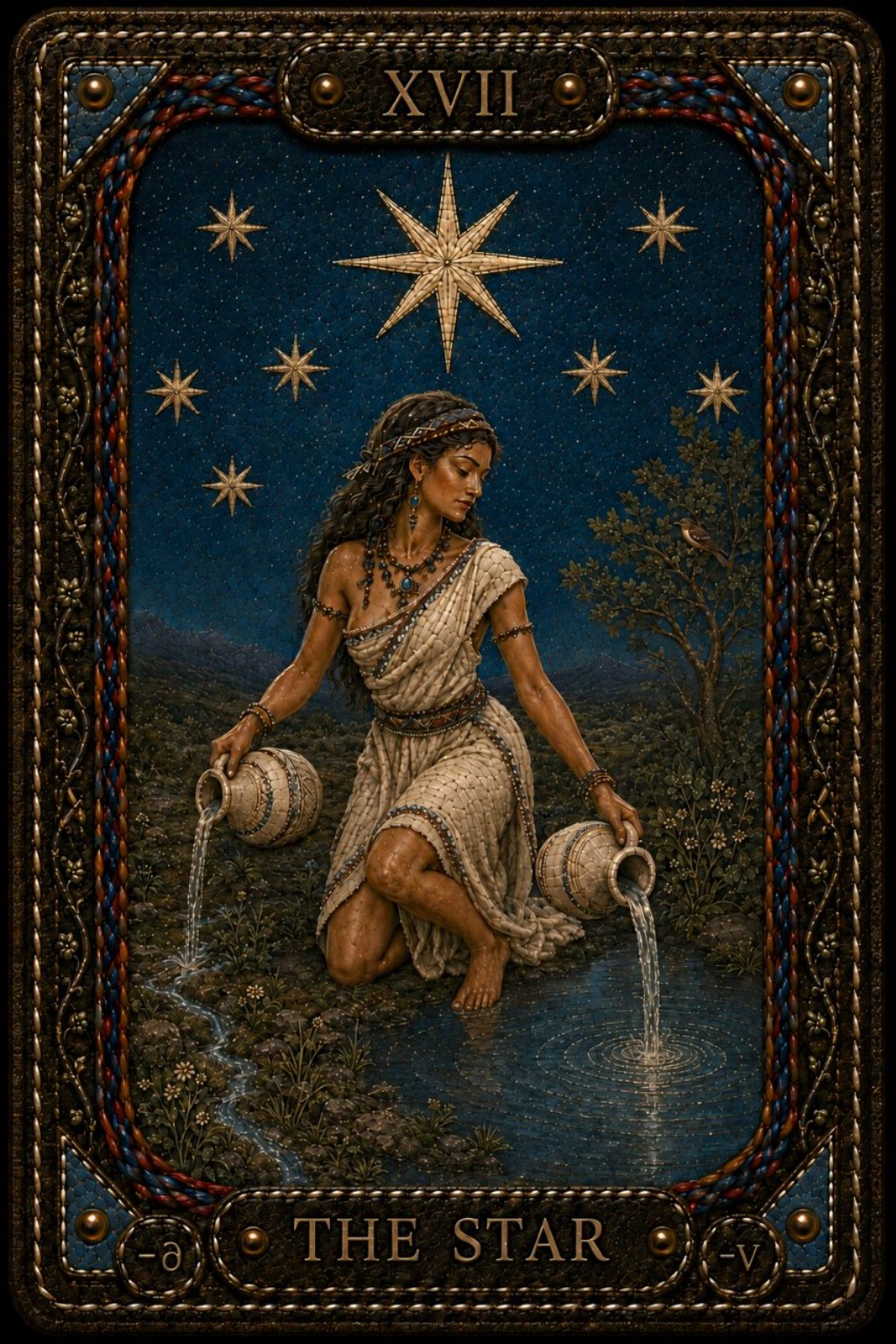
The Star is visible to different people. A shared principle lets us recognise a familiar human situation in someone else’s difficulty. The usual Aquarian “detachment” can then be understood as a little distance from an immediate personal judgement: first, let us find out what happened.
That distance can be very warm. People stop testing whether someone resembles the rest of the group before helping them. A beginner can remain awkward, slow and very different, yet still sense how people here respond to someone who has come to learn.
Moon in Pisces
Let us return to Marina. Her pupil plays the opening of a familiar piece, and she immediately feels how the next phrase should go. A few sounds bring up an entire musical history: earlier lessons, a favourite performance, the movement of her own hands.
But the pupil plays differently. At first, Marina wants to stop him and restore the familiar tempo. Then she listens to the end. Today, she hears something in this slowness that she had not noticed before. Her response changes: she asks him to repeat the passage she was about to correct.
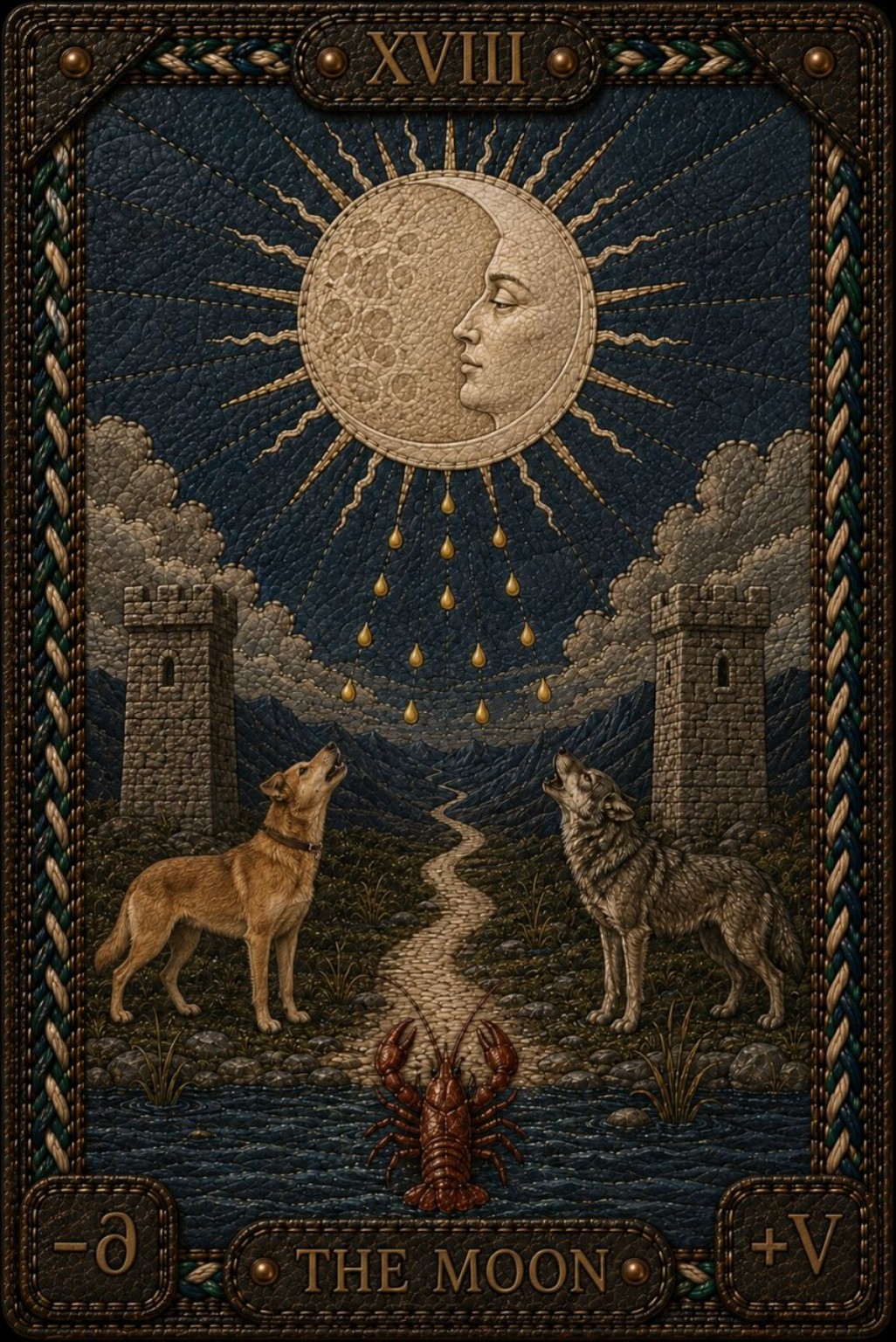
In Pisces, the Moon responds to something larger through the little that is available now. The beginning of a tune brings back a whole piece, a familiar smell brings back home, a short message brings back a relationship with someone we have not seen for a long time.
Memory, impressionability and imagination therefore make sense here. But strong recognition can also obscure what is happening. We read a terse reply from someone close and already feel an entire quarrel they had no intention of starting.
The Moon’s adjustment leaves room to hear a little more. Marina does not have to give up her experience. She needs to let the performance before her take its place beside the one already sounding inside her.
Two cards meet here. The Priestess reminds us of the life we have lived, with which we respond to the world. The Moon card, belonging to Pisces, reminds us of how much can emerge through the few images available. Neptune will ask what musical life continued in the new sound. The Moon lets us hear how Marina receives it now.
Marina may still grieve for the stage and nevertheless hear that music is continuing in her teaching. She may gradually become calmer and discover that lessons still feel like someone else’s work. How she feels and whether her musical life continues need not change together. Even relief deserves attention: sometimes it helps us return to what is happening; sometimes it comes from learning not to notice. So the Moon cannot be judged here simply by asking whether things feel nicer. What matters is the response a person has found to the life they are living now.
Today, a different answer is possible
After the lesson, Marina closes the score. In the past, she might have gone on correcting what she had heard in her head. Today she writes down one thought and goes to put the kettle on.
This is no great triumph over herself. Music has not become less important, and tiredness has not gone away for ever. She has simply managed to end this day in a way that suits it.
The Moon brings our attention back to such small changes. We notice when familiar effort has become excessive, when caution is no longer needed and when a pause will help more than an answer. Sometimes more persistence is useful; sometimes, allowing ourselves to ask. All of this happens to someone who already has a history.
A habit can hold that history and allow it to continue. It becomes confining when the present can no longer influence it. A loved one is always guilty in advance, a new undertaking is bound to fail, a familiar day again demands work that has long ceased to exist.
The Priestess keeps knowledge, but her scroll need not be the last word. What we have lived through can help us hear today’s voice, feel today’s strength and notice the person in front of us.
Then a simple “Will you be long?” finds a simple answer. “Ten minutes. I’m a little tired.”
The whole long day remains in those words. But it no longer requires the next conversation to repeat it all.